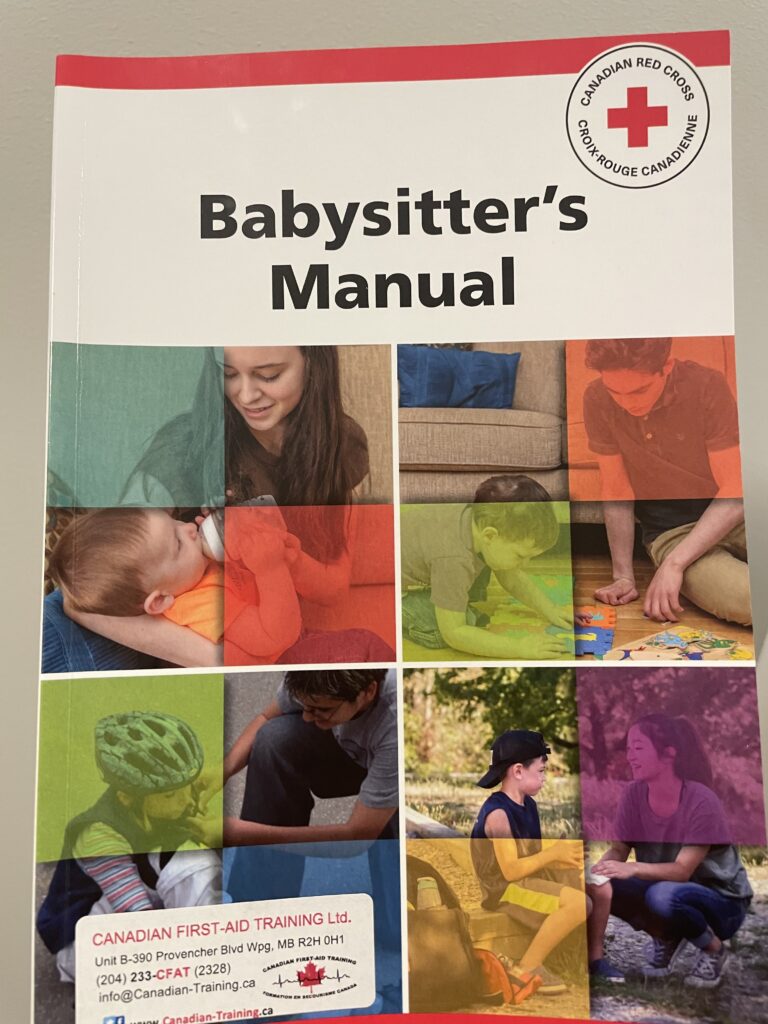
Last May, I attended a babysitting course by the Canadian Red Cross on babysitting, and what to do in certain situations. For example; what needs to be done in a child choking, how to care for temper tantrums, and how to change a diaper. The reason i chose to attend was so that i could officially babysit my younger cousins once I hit that 12-age mark.
The Canadian Red Cross provided information on what procedures I should follow in case of an emergency; as I learned how to deliver CPR to both small infants and adults, and practiced the compressions on both baby dolls and dummy mannequins. We also did a unit on choking, studying different methods (ex; back blows, abdominal thrusts…), and what to do in case that happens; whether it is on another person, or yourself.
When you are babysitting; it is important to pay attention to the way the kids act, and either take action or see if the kids can resolve the circumstances themselves. For instance; let’s say you are babysitting for two kids, and they are sitting at the table in the playroom; coloring with crayons. You watch them carefully for a while; then suddenly; the children start fighting over who gets to use the yellow crayon first! We learned that in this situation; it isn’t a life-threatening emergency that needs your leadership, but a small problem that the kids can probably handle themselves. Of course; if the problem gets out of hand; you must step in to find a solution.
Signs of abuse
During the babysitting course; there was a section where we learned how to identify if the child is in a position where they are being mentally/physically abused. The more common signs of physical abuse are bruises in unusual positions (ex: the back, bottom, or upper arm.) occurring in the same spot and if the kid (usually older) is wearing baggy clothing and hiding some scars from you. Some signs of mental abuse are a lack of confidence in a younger kid (ex: if they compare themselves to their younger siblings constantly), temper tantrums (although it doesn’t always point to mental abuse.), or indications of depression (crying, sulking.). In this scenario, the best thing to do is to comfort the child, but not promise to keep the secret. They might be scared to confess to you, but you have to be able to find a way; for their safety. Ways to help the kids would be to tell a trusted adult (ex: parent/guardian) or call the kid’s help phone for advice on the incident.
Conclusion
I could write a whole story just on what we covered during the babysitter’s course, but I chose not to bore you to sleep with a thirty-seven-page document. Instead, I gave snippets of the course; choosing to tell you about the most important details. The Canadian Red Cross babysitting course is perfect for kids from 10-12 wanting to learn more about babysitting or wanting to become a babysitter to look after younger siblings. Not only do they learn about caring for misbehaving children, but we learn about emergencies that can happen in the real world. So now it is up to us to choose whether to help, or freeze.